Webinar - Destination Norway 2026
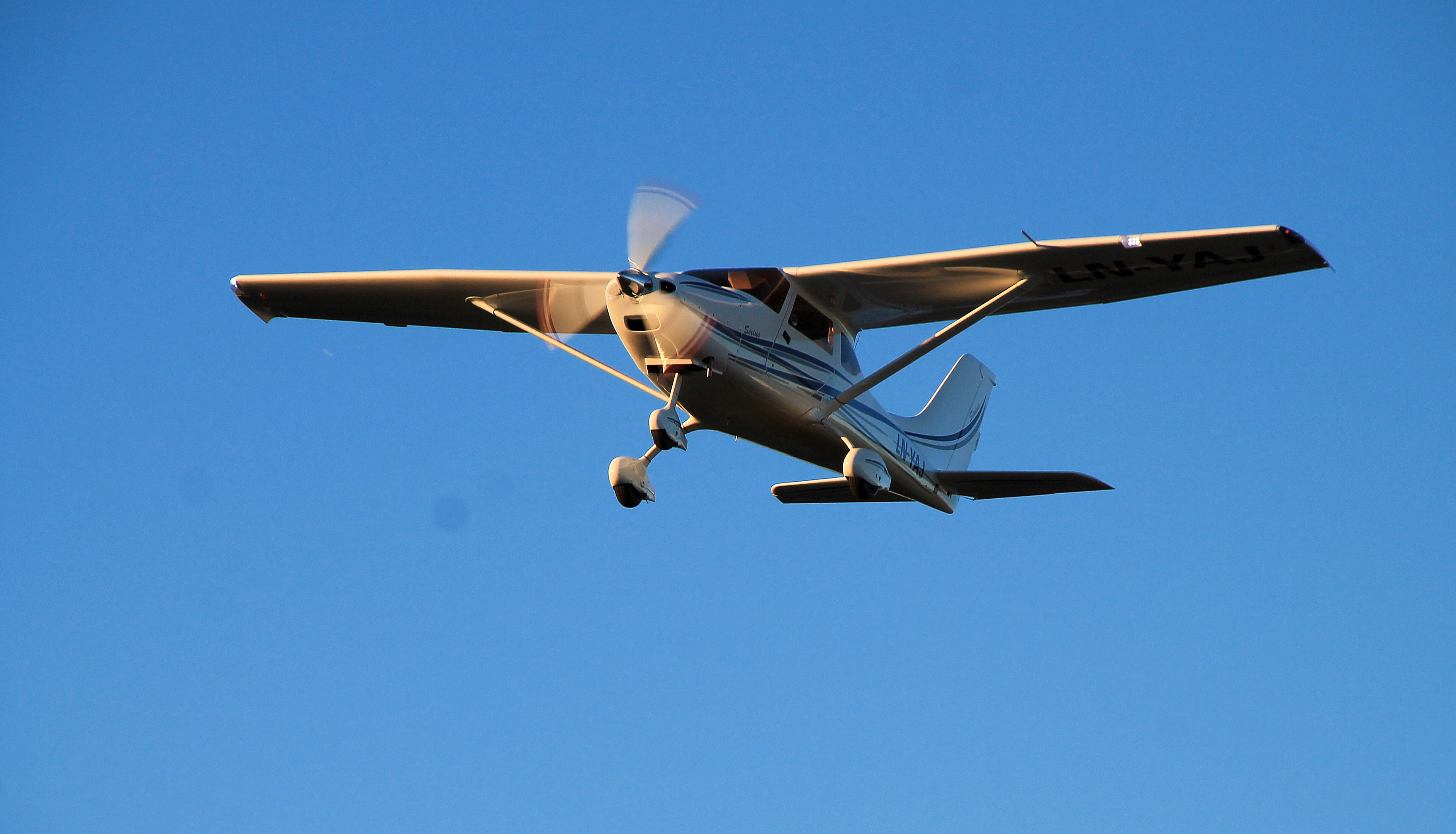
On 15 April 2026, the Norwegian Civil Aviation Authority hosted the webinar “Destination Norway”, aimed at pilots planning VFR flights to Norway.
The session provided practical operational insight into flying in Norwegian airspace, with a focus on real conditions, key risks, and safe decision-making.
Watch the webinar
Presentation
Key points
Entering Norway
Standard ICAO procedures apply. A flight plan must be filed at least 60 minutes before entry. Special considerations apply for certain aircraft types (e.g. homebuilt or permit-to-fly).
Planning and tools
Use updated digital tools (e.g. www.ippc.no, SkyDemon, ForeFlight). Check NOTAM, weather and aerodrome information carefully.
Airspace and communication
Norway has a mix of controlled and uncontrolled airspace. In class G airspace, pilots are encouraged to use 123.065 MHz (Unicom) and electronic conspicuity.
Operational risks
Flying in Norway involves:
- Rapid weather changes
- High terrain and confined areas
- Limited infrastructure and fuel availability
- Obstacles and GNSS interference in the north
Plan with larger margins than you may be used to.
AFIS
Many aerodromes provide information service only. Pilots are responsible for separation and must check opening hours.
Northern operations
Expect more demanding conditions: changing weather, turbulence, limited fuel and navigation challenges.
Emergency preparedness
Close your flight plan after landing, carry survival equipment, and always plan an escape option.
Additional resources
Questions and answers
| Question | Answer |
| How to deal with the many danger areas? | Danger areas in Norway are typically activated by NOTAM. Pilots must check NOTAMs during pre-flight briefing (e.g. via IPPC) and maintain situational awareness in flight. When in doubt, contact ATS for traffic information. Check www.ippc.no |
| What about proximity to the Russian border? | Operations near the Russian border require heightened awareness. Strict adherence to airspace boundaries is essential. Always check NOTAMs and avoid any proximity that could lead to airspace infringement. Check www.ippc.no |
| Can you fly IFR? | Yes, IFR operations are fully supported in Norway. However, pilots must consider terrain, weather conditions, and limited radar coverage in some areas. Proper planning is essential. IFR is perfectly alloved and easy to perform. When we warned about flying IMC, it was in the context of flying VFR in deteriorating weather. Going IFR is is a solution, but going temporarily IMC on a VFR-flight might lead you into terrain, even at 8000 feet. |
| Can we use above-TMA frequency for traffic info? What about Polaris Control? | Above TMA, ATS radio channel may be used for traffic information where available. Polaris Control provides en-route services in northern airspace. Always refer to AIP for correct channel usage. If you fly in G-airspace, underneath controlled airspace, you are encouraged to get traffic information from overlying ATS. Please transmit blind on 123,065 MHz also. Some of you may come from Bremen information and Copenhagen information, that are dedicated channels for VFR information and flight following. In Norway the norm is that there are no separate channels for flight following of VFR. You are welcome to check in on both TMA channels and on Polaris for VFR-information even if you are outside their airspace. Another thing is that it is easy to get clearance to enter controlled airspace contacting the same units, especially if you have filed a full ICAO-flightplan. Then they know your intentions and have normally planned the airspace accordingly. Check the AIP here |
| Any advice on flying schools where you can rent a C172 with instructor? | Several flying clubs and schools offer rental with instructors. Contact the Norwegian Airsports Federation (NLF). They will assist you. Check their website her |
| Is there a page listing webcams? | Yes, there are several sourches for webcameras. My personal favorite is the Windy app, but you also have offical pages such as the Norwegian Public Roads Administrations. Check their website here |
| Do you still have VORs in service? | Yes, VOR/DME stations remain in service, but the network is reduced. I the most northern parts even NDBs are keept as redundency |
| Is GLONASS affected by GPS jamming? | Yes. GNSS interference can affect multiple systems, including GLONASS. In Norway we have experienced disturbances in other GNSS systems than GPS. Pilots should be prepared for GNSS degradation or loss and have alternative navigation methods available. |
| Can you still get an Avinor landing card? | Yes. Avinor still offers GA-related payment solutions, including landing fee cards. Check Avinor’s website for current details. The weekly season card from Avinor is a great alternative covering fees at most Avinor airports found all along Norway. Check their website here |
| Is there a country-wide phone number to close FPL? | Yes. You can contact AIS via +47 64 81 90 00. Alternatively, close your flight plan with ATS at your destination. |
| Is ELT mandatory? | ELT or PLB is required, but depending on aircraft type and operation (e.g. Part-NCO). |
| Can you land outside airport operating hours? | Generally not without prior approval. Some aerodromes allow this with PPR arrangements. A national solution for outside opening hours called PFLY is established, but this is unfortunately not open to foreign pilots. |
| What about VFR night flying? | VFR night is permitted in Norway for appropriately qualified pilots. Requires proper equipment and planning. Weather and light conditions are critical factors. |
| Can ippc.no be used to file a flight plan from Germany to Norway? | Yes. IPPC can be used, provided the flight plan is correctly completed and properly addressed. |
| Has the fuel price increased a lot? | Fuel prices vary between locations and over time. Check locally before departure. You will also find links to the fuel companies in the VFR guide. Plan for NOK 30 to 40 per liter per april 2026. Fuel shortage is looming so prices may hike. Read more in the VFR-guide here |
| Is it possible to fly formation if the second pilot does not have English proficiency? | Yes, we do accept that. The lead of the formation must meet the language proficiency requirements in communication with ATS. We will in the future have a secondary GA radio channel in place that can be used for pilot to pilot communication. For exampel within a formation, but this is not yet in place. In the meantime please use UNICOM 123,065 MHz. |
| I’m interested in learning the requirements for helicopter landing outside of airports - is it like in Denmark possible with the consent of the land owner? | Do not assume that landowner consent alone is sufficient in Norway. Off-airport helicopter landings may also be affected by local restrictions, protected areas, noise/environmental rules, and normal safety/airspace requirements. Generally, natural landing sites located infield (cultivated land) may be used in accordance with SERA if you have land owner consent. |
| I fly a Vans RV4 Homebuilt aircraft on a UK Registration (Non Part 21). Will I need special permission to overfly Norway? | Usually no extra permission is needed only if the aircraft qualifies under CAA Norway’s published acceptance for amateur-built aircraft from ECAC member states with a permit to fly and a completed flight-test programme. Otherwise, a traffic permission is required before entry. Read more in the VFR-guide here |
| I fly a Vans RV9 Homebuilt aircraft on a UK Registration. Will I need special permission to land in Norway? | For a temporary private visit, the same rule set applies: if the aircraft is amateur-built and operates on documentation accepted by CAA Norway under the ECAC-based arrangement, and the flight-test programme is complete, that is normally sufficient. If not, apply for traffic permission before the flight. Read more in the VFR-guide here |
| Need advice for a homebuilt Jabiru J430 G-reg 700kg? | Usually no extra permission is needed only if the aircraft qualifies under CAA Norway’s published acceptance for amateur-built aircraft from ECAC member states with a permit to fly and a completed flight-test programme. Otherwise, a traffic permission is required before entry. Read more in the VFR-guide here |
| Does Norway implement the ECAC recommendation for "Historic" Permit to Fly aircraft such that they have a standard Approval? | Partly. Homebuilt aircraft do not require permit, but ex military must have a traffic permission. Read more about that in the VFR-guide. Read more in the VFR-guide here |
| French builder of an RV7 - restraint navigability certificate, do I need a traffic permit ? | Usually no extra permission is needed only if the aircraft qualifies under CAA Norway’s published acceptance for amateur-built aircraft from ECAC member states with a permit to fly and a completed flight-test programme. Otherwise, a traffic permission is required before entry. Read more in the VFR-guide here |
| Are those small airfields in SkyDemon or what is the best source to find those small airfields? | Many smaller airfields may appear in 3. party navigation apps such as SkyDemon, Easy VFR or AirNavPro. We are working on a update for the AIP but this will not be ready for this summer. |
| I fly an ex-military aircraft (Bulldog), not an EASA aircraft. Where would I go to find out if my aircraft requires additional permission to enter Norway? | For Ex-military aircraft permission is required. We have updated the chapter in the VFR-guide with more information about traffic permit. Read more in the VFR-guid here |
| The restrictions for amateur constructions were not very clear. What must I do to legally enter Norway from a Schengen country with a Vans RV9 ? | Usually no extra permission is needed. The aircraft should qualify under CAA Norway’s published acceptance for amateur-built aircraft from ECAC member states with a permit to fly and have completed a flight-test programme. Otherwise, a traffic permission is required before entry. Read more in the VFR-guide here |
| How do native English speakers demonstrate English language capability? | The practical answer is to hold the valid language proficiency endorsement or equivalent evidence required by your licensing authority and radio privileges, and to ensure your licence documents meet the applicable ICAO/EASA requirements before flight. Check EASA website here |
| Are there other airports/airdromes not listed on avinor website ? | AIP covers only larger airports not every aerodrome or private strip in Norway. We are working on a update for the AIP, but this will not be in place this summer. 3. party apps as SkyDemon, Easy VFR or AirNavPro are good sources. |
| What are the typical costs, other than fuel, for using the different types of airfields in Norway? | Costs vary a lot. At Avinor airports you should expect start/landing fees, while parking is free for GA aircraft under 2730 kg. Non-Avinor airfields may have lower fees, club fees or sometimes no fee. Customs handling, out-of-hours service, parking and local services may add cost. If you plan your route using Avinor airports, you should concider a weekly season pass from Avinor where you may drastically reduce airport fees. Check Avinor website here |
| Is there a clearance necessary for class C or D airspace at all time and how to deal with the danger Areas (EDR)? | Yes. Entry into Class C or Class D airspace requires an ATC clearance. Danger areas must be checked in AIP/NOTAM and should be treated as unavailable when active unless a published coordination or clearance procedure applies. |
| Can you elaborate on Avgas availability in Norway. Any issues? | Avgas is available at many airports, but not everywhere and not always at the time you arrive. Opening hours, local arrangements and temporary shortages matter, especially outside the main network. Always verify availability in AIP/NOTAM and, if important to your planning, call ahead. |
| Do many of the small and farm strips have AVGAS available? | Generally, no. Many small or farm strips do not have Avgas on site. Plan to refuel at established aerodromes unless you have confirmed local fuel availability in advance. |
| Are the power lines on Skydemon accurate and reliable | SkyDemon is useful for planning, but power-line depiction should not be treated as the final obstacle source. Cross-check with official charts, obstacle information, NOTAM and local knowledge, and keep conservative margins during low-level flying. |
| How do you find out what the height/altitude of the power lines is? | Use official obstacle data, AIP charts, Avinor obstacle information and local briefing. Be aware that not every smaller wire or span will have complete published height data, so generous terrain and obstacle margins remain essential. |
| Is there a lot of GPS jamming and spoofing? In a basically equipped aircraft what is the best way to deal with it? | Yes, GNSS interference is a real operational issue in parts of Norway, especially in the north. Check NOTAMs, be ready to revert to visual/conventional navigation, carry paper or offline backups and brief escape options. |
| Is it relatively easy to fly between Norway and airfields in Sweden and Finland? Particularly in the North this seems like the borders are not far apart! | Yes, cross-border GA flying is generally straightforward, including in the north, but you must still comply with flight plan requirements, customs/immigration rules, opening hours and any local airspace restrictions. The distances are short, but services may still be limited, so plan carefully. |
| Any issues with N registered aircraft? | If you are domiciled in Europe, EASA require that you hold EASA pilots certificates and ratings valid for the aircraft flown, when flying in EASA-countries. |